
Saudi Arabia World Cup History Triumph Over Argentina in Lusail 2022
On November 22, 2022, the Lusail Stadium in Qatar witnessed a footballing masterpiece etched in Saudi Arabia World Cup history—an extraordinary upset that reverberated beyond the sport itself. Saudi Arabia, a team long considered a modest contender on football’s grandest stage, stunned the world by defeating Argentina 2-1 in what became one of the most defining moments of the FIFA World Cup 2022. This victory was not just a match result; it was a symbol of national pride, resilience, and the unpredictability that makes football the “beautiful game.”
Pre-Match Expectations
Going into the tournament, Argentina was one of the clear favorites to win the World Cup. Led by Lionel Messi—arguably the greatest footballer of all time—Argentina’s squad brimmed with skill, experience, and the recent confidence of winning the Copa America in 2021. Their tactical prowess, attacking flair, and cohesive team play made them a daunting opponent.
In stark contrast, Saudi Arabia entered the Cup with tempered expectations. Nicknamed the Green Falcons, their team mostly comprised players competing in the domestic Saudi leagues or small international clubs. Historically, Saudi Arabia had shown flashes of competitiveness, but beating a giant like Argentina on the world stage was unforeseen by most pundits and fans alike.
Soccer analysts and global audiences alike anticipated a dominant Argentine victory, with many seeing their lineup as far superior in talent and experience. Yet, this scenario set the stage for one of the most thrilling underdog narratives in World Cup history.
The Match Kickoff: Messi’s Early Breakthrough
The match began largely as expected: Argentina took control early. Messi, ever the maestro, orchestrated attacks with creativity and vision. In the 10th minute, Messi opened the scoring, seeming to confirm the pre-tournament predictions. The atmosphere in Lusail Stadium, packed with a mix of local fans and international viewers, gave Argentina momentum and confidence.
For a moment, it looked like the game would unfold predictably: Argentina dictating play, with Saudi Arabia struggling to respond against superior quality and pressure.
Saudi Arabia’s Tactical Brilliance Under Hervé Renard
However, Saudi Arabia’s response was nothing short of spectacular and strategically masterful. Their French coach, Hervé Renard, a specialist known for inspiring underdogs with potent tactical game plans, deployed a system that frustrated Argentina’s best attacking instincts.
One cornerstone of Saudi strategy was a highly disciplined, compact defensive shape, augmented by an intelligent offside trap that saw the referee disallow three potential goals by Messi and Lautaro Martínez. This defensive discipline frustrated Argentine forwards and forced the South Americans into attacking from less threatening positions.
Renard then transitioned Saudi Arabia into a more aggressive stance after halftime, encouraging his team to press higher and exploit the spaces left by Argentina when pushing forward. This shift turned the game’s momentum.
The Turning Point: Goals That Changed History
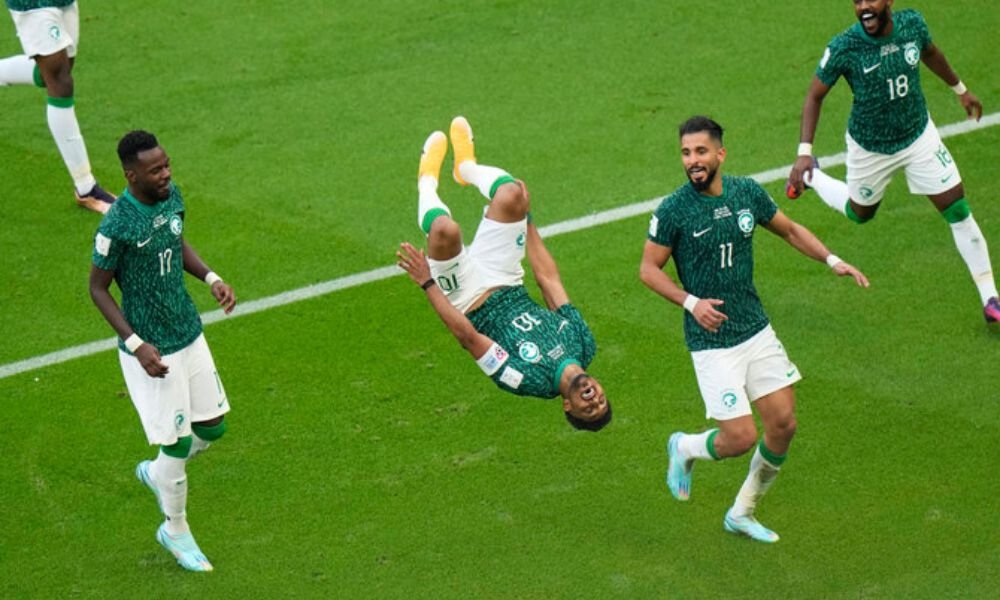
The second half brought a sea change. In the 48th minute, Saleh Al-Shehri capitalized on a well-placed pass and calmly finished past Argentina’s goalkeeper Emiliano Martínez, sending shockwaves through the stadium and fans worldwide. The equalizer ignited belief within the Saudi squad and supporters.
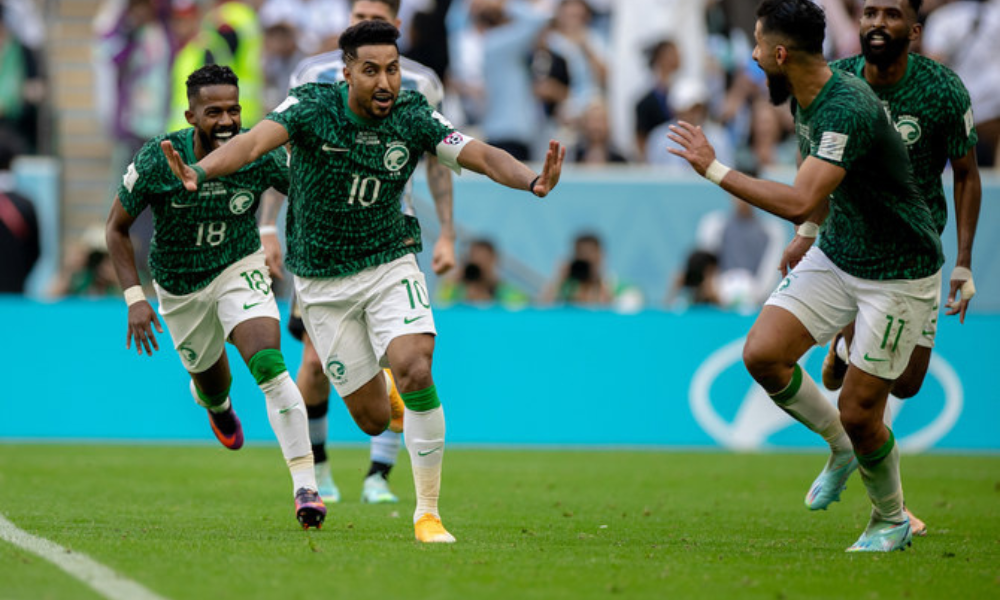
Minutes later, in the 53rd minute, Salem Al-Dawsari, a dynamic winger known for his skill and composure, struck a sensational goal. His strike was a clinical, precise masterpiece that caught Argentina’s defense off guard and shifted the scoreboard to 2-1 in favor of the Green Falcons.
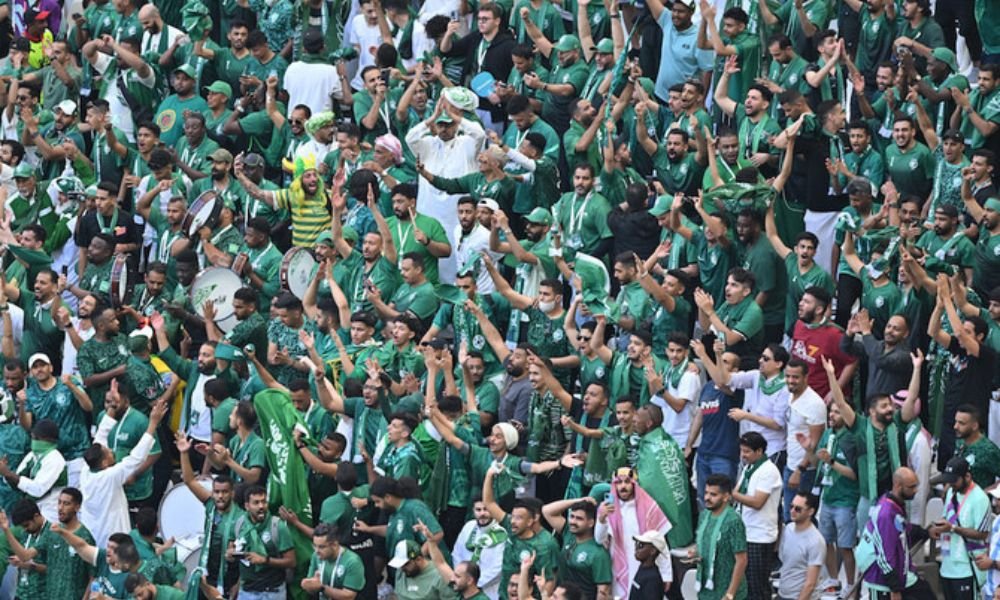
The stadium erupted with the fervor of Saudi fans sensing a historic upset. On the sidelines, the joy was palpable in the Saudi technical team, while the Argentine squad faced an unexpected and unwelcome challenge.
Argentina’s Response and Saudi Defensive Resolve
Argentina, never a team to surrender easily, immediately launched a fierce offensive to claw back into the game. Messi, fueled by pride and determination, led a relentless assault, orchestrating attacks with intricate passes and testing Saudi goalkeeper Mohammed Al-Owais with powerful shots.
Al-Owais rose to the occasion magnificently, performing multiple breathtaking saves that became pivotal for securing the Saudi victory. His confident, composed handling of Argentine pressure was a cornerstone of Saudi Arabia’s defensive resilience.
Despite Argentina’s efforts, the Green Falcons held firm, defending their lead with unity and tactical discipline until the final whistle.
Aftermath and National Impact: More Than a Game
The final whistle marked a moment that Saudi Arabia, its people, and football fans around the world will never forget. The Green Falcons had prevailed against one of football’s most storied nations in one of the greatest World Cup shocks ever recorded.
In Saudi Arabia, the victory became a unifying national celebration far beyond sport. It inspired youths, reinvigorating the kingdom’s football culture and ambitions. The triumph symbolized the power of determination, strategic planning, and belief against overwhelming odds. It showed the world that underdogs could rewrite narratives, challenging football’s status quo.
Lessons for Argentina: A Humbling Experience in a Glorious Campaign
For Argentina, the match was a sharp wake-up call. Despite their loss, they learned valuable lessons about complacency and the unpredictability inherent in football. The Argentine team recovered their composure and eventually triumphed in the World Cup final, but the defeat to Saudi Arabia remained a striking memory. It underscored how no opponent should ever be underestimated in the tournament.
Legacy of the Saudi Victory in World Cup Lore
Saudi Arabia’s historic 2-1 victory over Argentina remains a symbol of football’s magical unpredictability. It encapsulates what millions love about the game: moments of unexpected joy, triumph over adversity, and the pure drama of competition.
The 2022 match will be remembered not as an upset against statistics, but as a triumph of spirit, preparation, and national pride—a story that will inspire future generations worldwide.