2034 FIFA World Cup Overview — Format, Teams, Schedule & Trends
The 2034 FIFA World Cup overview stands as one of the most anticipated sporting events of the decade — not only for football fans, but for anyone fascinated by global culture, mega-events, and how sports evolve. With the tournament heading to Saudi Arabia, the World Cup will continue its shift toward new hosts, new fan bases, and new tournament dynamics.
Below is a complete breakdown of what we know, what to expect, and how the 2034 edition will shape the sport’s future.
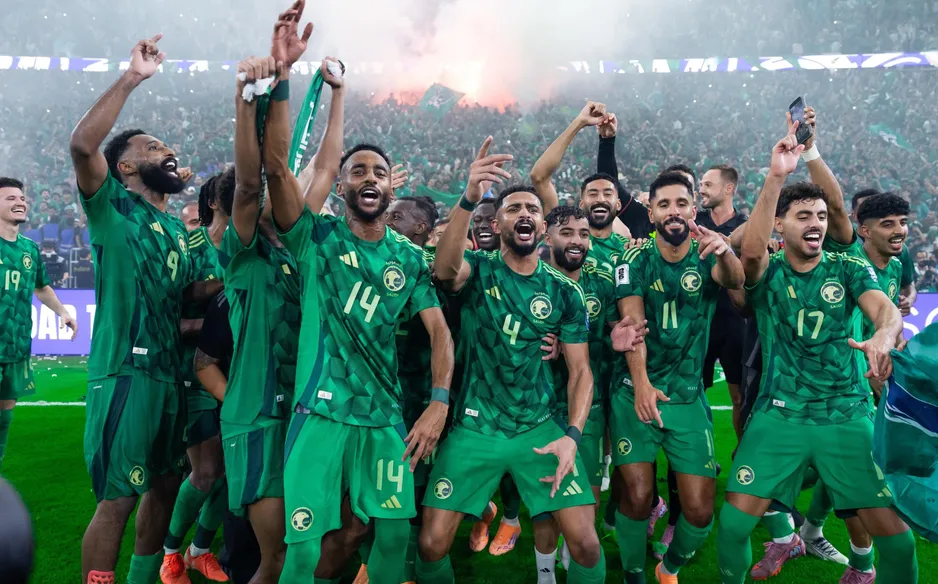
Host Nation & Vision of the 2034 Tournament
Saudi Arabia secured hosting rights after submitting the only confirmed bid within FIFA’s new accelerated process. The Saudi vision emphasizes:
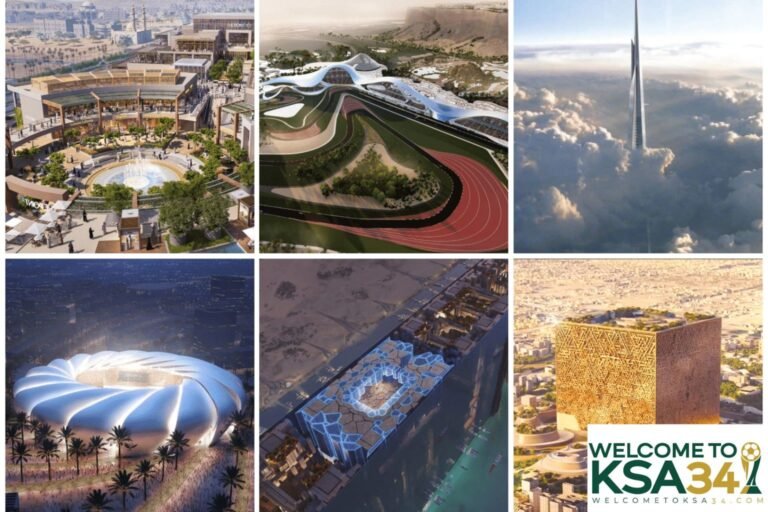
- Large-scale infrastructure development
- Global sports tourism
- Sustainability and modernization
- Cultural and intercontinental fan experience
- Stadium innovation & technology-first fan services
Like Qatar 2022, the 2034 edition is expected to highlight a Middle Eastern climate, logistics network, and regional tourism boom.
Expanded Format — How the Tournament Will Work
Following FIFA’s recent expansion roadmap, 2034 is set to continue the 48-team World Cup format, the first of which debuts officially in 2026 (USA, Canada, Mexico).
Tournament Format at a Glance
- Teams: 48 national teams
- Group Stage: 12 groups of 4
- Teams Advancing: Top 2 in each group + eight best 3rd place teams
- Knockouts Begin At: Round of 32
- Total Matches: 104 (approx.)
- Duration: ~35–40 days
This format brings more drama, more qualification access, and additional knockout rounds — increasing the stakes earlier in the competition.
Who’s Expected to Play — Qualification & Team Landscape
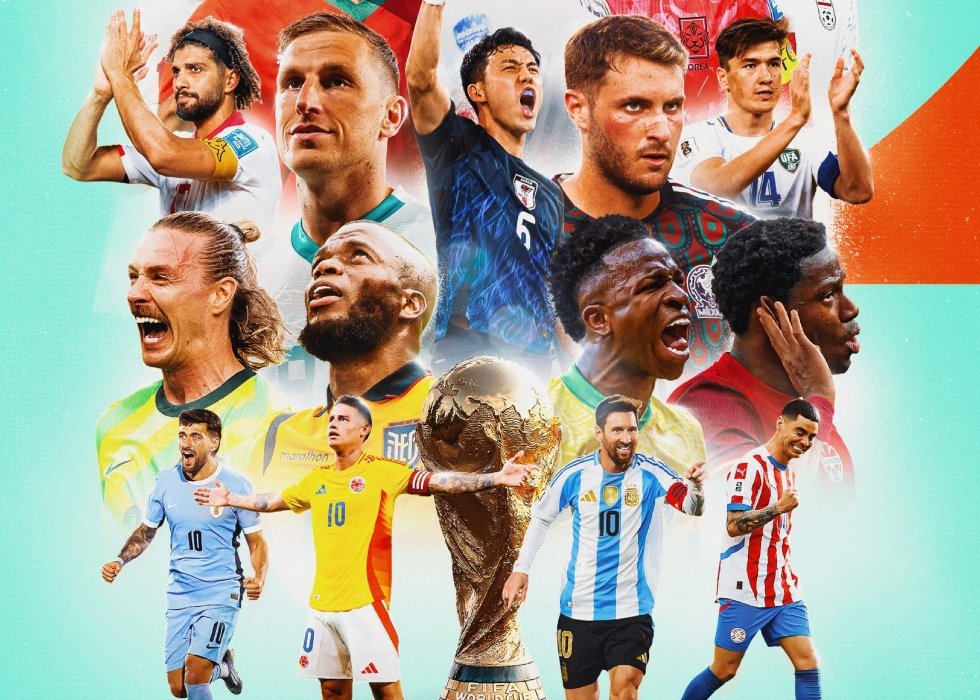
While qualification hasn’t been finalized, we can already map the competitive landscape based on confederation allocations.
Likely Trends in Qualification
- Asia (AFC): Larger spots + host advantage
- Africa (CAF): Continues to rise — more slots unlock competitive depth
- Europe (UEFA): Still dominant but deeper field means more mid-tier nations can make history
- CONMEBOL (South America): Almost all member nations likely to qualify
- CONCACAF & Oceania: Expanded representation boosts visibility
Teams to Watch
While powerhouse nations will always command attention (Argentina, France, Brazil, Germany, England), 2034 may highlight:
- Re-emerging nations (e.g., Italy or Colombia)
- Youth-generation nations (e.g., USA, Japan, Morocco)
- Ambitious hosts (Saudi Arabia’s football investments continue to rise)
Scheduling & Seasonal Trends
Middle Eastern climate means scheduling considerations matter.
Expected Timing
Though not officially confirmed, strong indications suggest:
- Late Fall / Early Winter Period
- Similar to the Qatar 2022 calendar, to avoid the heat impact on matches.
Match Windows & Fan Logistics
Expect:
- Reduced travel time between host cities
- Compact geography for fan accessibility
- Clustered matches for better attendance
This model proved successful in 2022 and may be a new norm for future World Cups.
Commercial & Economic Trends
The 2034 World Cup aligns with a new era of sports commercialization:
- Major state-level investment
- Regional tourism push
- Stadium smart technology
- Digital-first ticketing & broadcasting
- VR/AR-based fan experiences
Saudi Arabia’s massive push into global sports (football, F1, eSports, golf, boxing, tennis) suggests the event will be part of a broader strategy to diversify national economy and global influence.
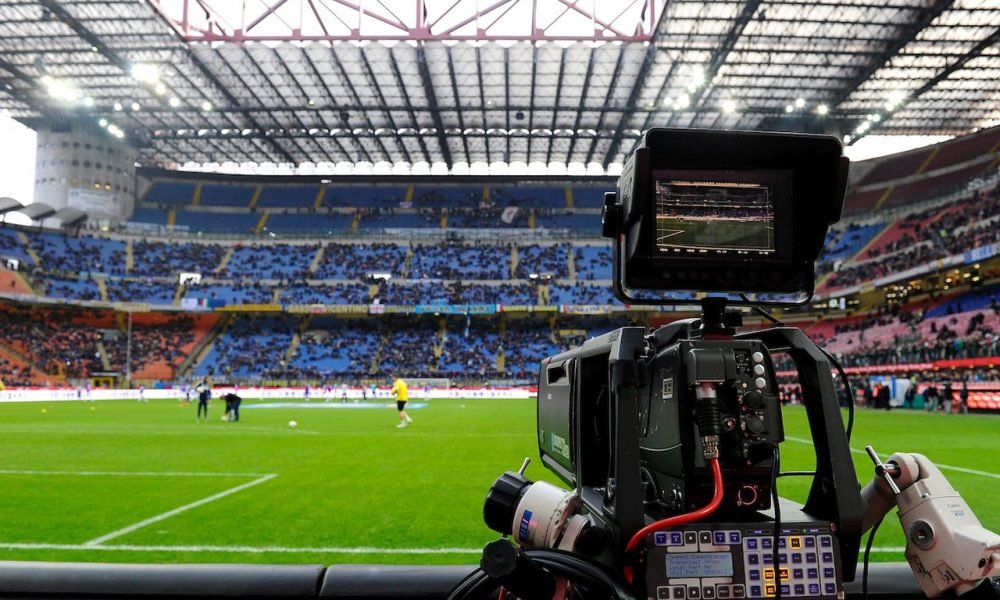
Broadcasting & Media Revolution
By 2034, media consumption will be very different than in 2022 or 2026.
Expect shifts such as:
- Micro-subscription streaming for matches
- Fan-controlled camera views
- AI-assisted match analysis
- Short-form content as primary highlight format
- Virtual watch parties & VR experiences
Younger audiences, especially Gen Z and Gen Alpha, will heavily influence distribution models.
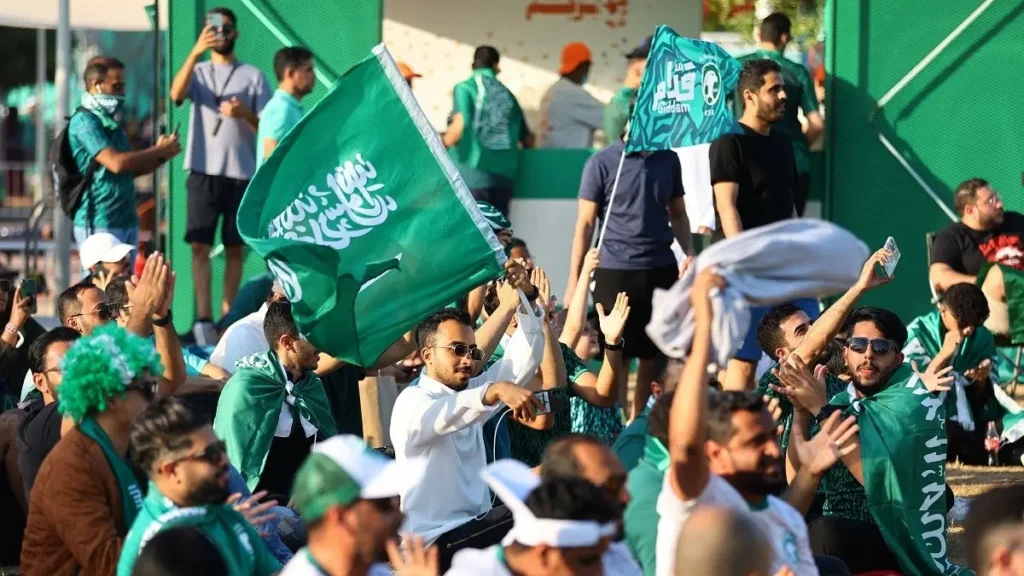
Fan Experience & Tourism
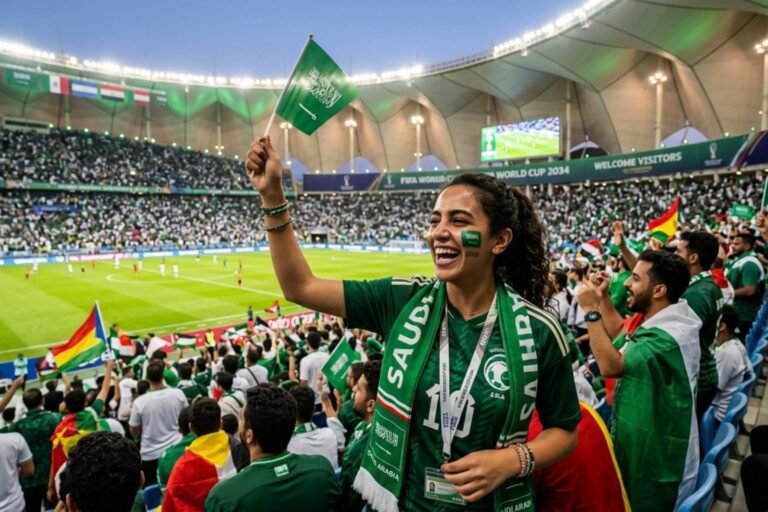
Fans traveling for international tournaments are no longer just attending matches — they’re seeking cultural immersion.
Saudi Arabia may integrate experiences like:
- Historical & cultural site tourism
- Entertainment zones & festival overlays
- Local food & arts showcases
- Regional travel hubs (Riyadh, Jeddah, NEOM, etc.)
Tourism integration will likely be a major narrative for 2034.
Tactical & Football Trends to Expect on the Pitch
The sport itself is evolving.
Between 2026–2034, experts predict:
- Even more data-driven tactics
- High-pressing systems with adapted fatigue management due to more matches
- Greater youth-driven squads because of expanded competitions
- Goalkeeping evolution (modern sweeper-keeper role)
- Super-clubs shaping national squads more than federations
- Rise of non-European football schools (Japan, Morocco, USA, etc.)

Why 2034 Matters for Football’s Future
This World Cup symbolizes a broader FIFA strategy:
- Rotate new regions into global football spotlight
- Expand competitive access
- Grow global commercial & media ecosystems
- Modernize the game for younger fans
The result is a World Cup that’s more global, more commercial, more digital, and more culturally diverse than ever before.
Final Thoughts
The 2034 FIFA World Cup isn’t just another tournament — it’s the next chapter in how the world watches, plays, and profits from football. With a new host, expanded format, new media technologies, and more participating nations, this edition will shape the future of both football and global sports culture.