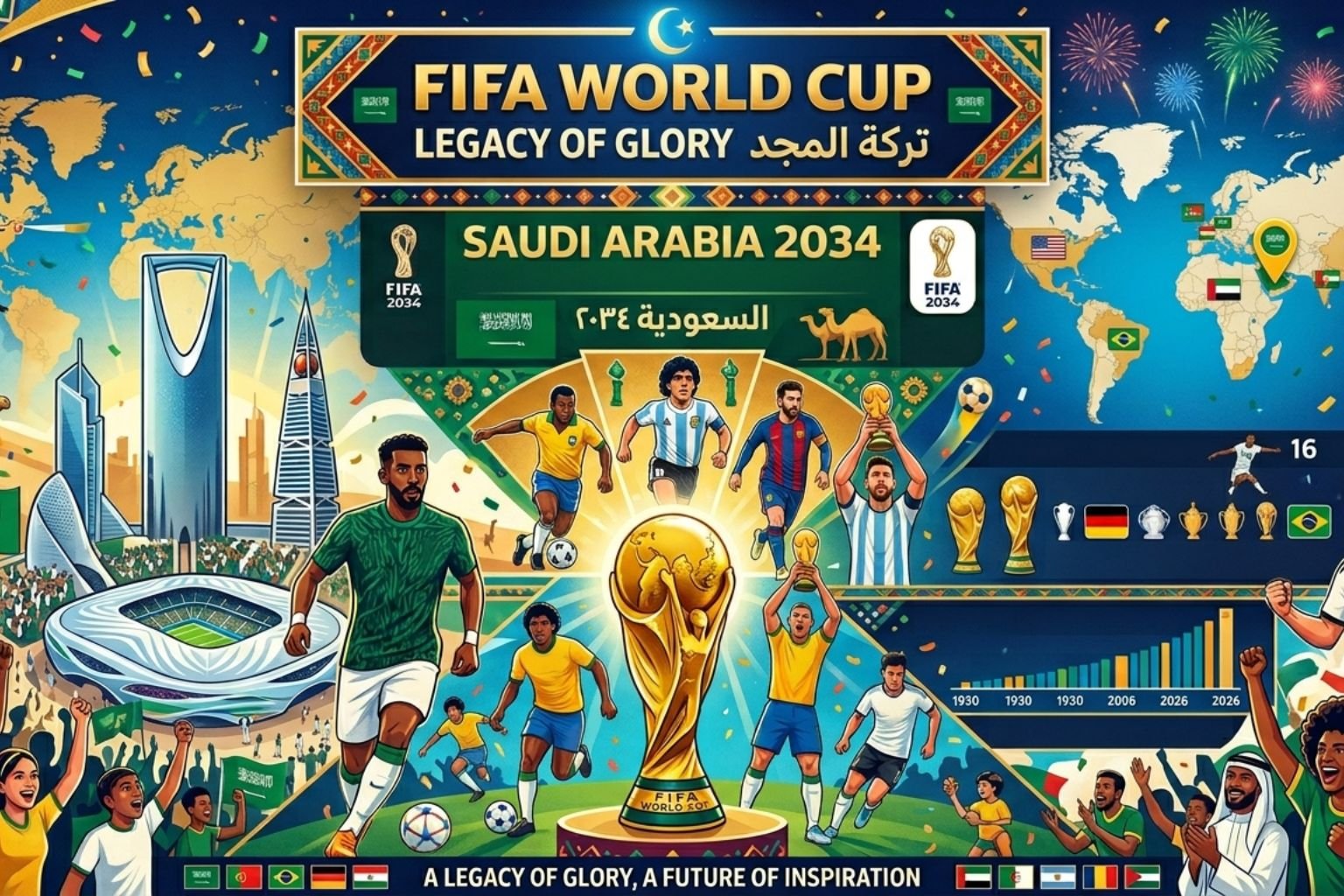
FIFA World Cup History & Records: Greatest Moments, Players & Statistics
The FIFA World Cup is more than just a football tournament—it’s a global phenomenon that transcends sports, culture, and nationality. Since its inception in 1930, the World Cup has created unforgettable moments, launched legendary careers, and inspired billions of people worldwide. From shock upsets to breathtaking displays of skill, from heart-breaking defeats to triumphant victories, the World Cup encapsulates the full spectrum of human emotion and athletic excellence.
This comprehensive guide explores the rich history of the FIFA World Cup, breaking down records, celebrating the greatest players, reliving iconic moments, and analyzing the statistics that define football’s greatest tournament. Whether you’re a casual football fan or a dedicated historian, this article will deepen your understanding and appreciation of the World Cup’s legacy.
The Evolution of the FIFA World Cup
Origins: 1930 – The First World Cup
The Visionary: Jules Rimet
In the 1920s, FIFA president Jules Rimet envisioned a global football tournament that would bring nations together in peaceful competition. This visionary idea led to the creation of the FIFA World Cup, fundamentally changing the landscape of football forever.
First Tournament: Uruguay 1930
Details:
- Dates: July 13-30, 1930
- Host: Uruguay
- Participating Nations: 13 (small by modern standards)
- Total Matches: 18
- Venue: Estadio Centenario, Montevideo
- Winner: Uruguay (defeated Argentina 4-2 in the final)
Significance:
- First international football tournament bringing nations together
- Uruguay’s dominance in early football established them as legends
- Small field compared to modern standards but massive for the era
- Created template for future World Cups
- Demonstrated football’s global potential
Notable Facts:
- Only 13 nations participated (Europe and Americas represented)
- European nations had to travel by ship to South America
- Some European nations declined to participate
- Uruguay’s home advantage crucial
- Argentina’s run to final surprised many
- Final attendance: 93,000 (remarkable for the era)
World War II Interruption (1934-1950)
Lost Tournaments:
- 1942 and 1946 World Cups cancelled due to World War II
- First tournament gap since 1930
- Football paused as world focused on conflict
- Return to normalcy through sport symbolized recovery
Post-War Tournaments:
- 1934 (Italy): Continued European dominance
- 1938 (France): Italy’s second consecutive title
- 1950 (Brazil): First tournament after war, expanded participation
Growth Era: 1950s-1970s
Expansion & Globalization:
1950 Brazil World Cup:
- First World Cup outside Europe (South America)
- Largest tournament to that date (13 nations)
- Brazil’s football culture on display
- Uruguay’s upset victory over Brazil (2-1) in final match
- Demonstrated South American football supremacy
- Created lasting impression on global football
1954 Switzerland:
- West Germany’s emergence
- Miracle of Bern: West Germany defeats favored Hungary (3-2)
- Germany’s rise as football power
- Hungary’s “Golden Team” falls short
- Multiple continental powers emerging
1958 Sweden:
- Brazil emerges as global power
- Pelé at age 17 helps Brazil win
- Beautiful, fluid Brazilian football style impresses world
- First non-European, non-South American technical influence spreads
- Pelé becomes international superstar
1962 Chile:
- Brazil wins second consecutive title
- Garrincha takes over leadership from Pelé (injured)
- Brazil’s dominance continues
- European teams struggle
- South American football reaches peak
The Golden Age: 1966-1980
1966 England – The Birth of Modern Football
Historic Tournament:
- First World Cup held in England
- Technology introduced: Televised matches worldwide
- Largest global viewership to date
- England’s only World Cup victory
- Geoff Hurst scores hat-trick in final (still only World Cup hat-trick in final)
- England defeats West Germany 4-2 (after extra time)
- Alf Ramsey’s famous quote: “We won it” creates lasting legacy
- England’s dominance on home soil
Cultural Impact:
- Football becomes mainstream global phenomenon
- Television revolutionizes sport consumption
- First truly “modern” World Cup
- Sets precedent for future tournaments
1970 Mexico – Peak Beautiful Football
Tournament Highlights:
- Brazil wins third World Cup title
- Pelé at his absolute peak
- Tostão, Garrincha partnership
- England’s defending title ends in quarterfinals
- Mexico’s altitude challenges teams
- First World Cup with color television worldwide
- Brazil’s 1970 squad considered one of greatest teams ever
Iconic Moments:
- Pelé’s graceful style mesmerizes audiences
- Carlos Alberto’s goal in final (often cited as greatest World Cup goal)
- Brazil defeats Italy 4-1 in final
- Display of technical excellence, creativity, attacking prowess
- Sets standard for attacking, beautiful football
- Millions watch via color television for first time
1974 West Germany – Total Football
Tournament Significance:
- Netherlands and West Germany dominate
- Johan Cruyff and Dutch “total football” revolutionizes sport
- Netherlands reaches final despite not winning trophy
- West Germany defeats Netherlands 2-1
- Tactical innovation changes football forever
- Cruyff becomes legend despite losing
1978 Argentina – Maradona Emerges
Tournament Details:
- Argentina wins first World Cup (host nation)
- 22-year-old Diego Maradona impresses
- Argentina defeats Netherlands 3-1 (after extra time)
- Mario Kempes scores twice in final
- Emotional victory for Argentina
- Maradona’s emergence signals changing of guard
The Maradona Era: 1982-1994
1982 Spain – England’s Redemption (Almost)
Tournament Context:
- England performs well, narrowly eliminated
- Italy reemerges as power
- West Germany reaches final again
- Italy defeats West Germany 3-1
- Maradona struggles with fouling, injury
1986 Mexico – Maradona’s Finest Hour
Epic Tournament:
- Maradona’s individual brilliance carries Argentina to victory
- Two iconic goals vs. England (Hand of God, then greatest goal)
- Hand of God: Most controversial moment in World Cup history
- Second goal: Weaving through entire English defense (called greatest ever)
- Argentina defeats West Germany 3-2 in final
- Maradona wins Golden Ball (best player)
- Single player dominates tournament like never before
- Maradona becomes global superstar
Hand of God Moment:
- June 22, 1986, Quarter-final, Argentina vs. England
- Maradona punches ball into net (unseen by referee)
- England’s Bobby Robson furious
- Controversy lasts decades
- Some call it cheating, others part of football’s charm
- Maradona’s explanation: “A little bit of the hand of God, a little bit of Maradona’s head”
Greatest Ever Goal:
- Seconds after Hand of God goal
- Maradona dribbles from midfield
- Weaves through five English defenders
- Strikes powerfully past goalkeeper
- Called “Goal of the Century” by many
- Opposite of Hand of God—pure skill
- Fans remember this goal more than Hand of God
1990 Italy – Maradona’s Downfall Begins
Tournament:
- West Germany wins third World Cup
- Maradona helps Argentina reach final
- Germany defeats Argentina 1-0 (after extra time)
- Maradona’s dominance waning but still competitive
- Increasingly rough play mars his tournament
1994 USA – End of Era
Tournament Significance:
- Largest World Cup attendance to date
- Brazil wins fourth World Cup title
- Ronaldo emerges as new superstar
- Maradona fails drug test, banned from tournament
- Brazilian football reasserts dominance
- Maradona’s era effectively ends
Modern Era: 1998-Present
1998 France – European Resurgence
Historic Tournament:
- France wins first World Cup title (host nation)
- Zinedine Zidane leads France
- Brazil reaches final (Ronaldo mysteriously unavailable in final)
- France defeats Brazil 3-0
- Zidane’s two headers in final decisive
- France’s style combines skill and organization
- European dominance reasserts itself
2002 South Korea/Japan – Ronaldo’s Redemption
Tournament:
- Brazil wins fifth World Cup title
- Ronaldo scores 8 goals (most in single tournament)
- Ronaldo’s “alien” hairstyle becomes iconic
- Brazil’s attacking prowess impresses
- Germany reaches final
- Brazil defeats Germany 2-0
- Ronaldo scores twice in final
- South Korea’s surprising run impresses (first Asian team to reach semi-finals)
2006 Germany – Zidane’s Swan Song
Tournament Significance:
- Italy defeats France in final
- Zinedine Zidane’s final match
- Zidane’s famous (or infamous) headbutt on Marco Materazzi
- Zidane sent off in extra time of final match
- Zidane’s legacy tarnished but tournament-winning performance incredible
- Italy’s fourth World Cup title
- Germany’s three-goal comeback vs. Sweden impresses
- Final memorable for wrong reasons (Zidane incident)
2010 South Africa – Vuvuzela Symphony
Tournament Details:
- Spain wins first World Cup (first European team to defend Euro title in years)
- Spain’s “tiki-taka” style dominates
- Andrés Iniesta scores winning goal (final minute of final)
- Spain defeats Netherlands 1-0
- Vuvuzelas (traditional horns) become iconic/annoying
- Spain’s technical dominance impresses observers
- David Villa leads attack
- Iker Casillas’ goalkeeper mastery
2014 Brazil – German Dominance
Epic Tournament:
- Germany wins fourth World Cup
- 7-1 demolition of host Brazil in semi-finals (most shocking result)
- Brazil’s Neymar injured in semi-final (wouldn’t play final)
- Germany’s efficiency vs. Brazil’s emotional devastation
- Mario Götze scores winning goal in final (extra time)
- Argentina reaches final (Messi’s closest World Cup moment to victory)
- Germany’s organizational excellence dominates
- Brazil’s heartbreak becomes iconic negative memory
2018 Russia – France’s Second Title
Tournament Significance:
- France wins second World Cup (first since 1998)
- Kylian Mbappé emerges as superstar at age 19
- Paul Pogba’s powerful goal in final
- France defeats Croatia 4-2
- Mbappé’s speed and skill mesmerize defenders
- France’s balanced team (attack and defense)
- Croatia reaches final despite smaller population
- Luka Modrić wins Golden Ball (best player)
2022 Qatar – Argentina’s Redemption
Historic Tournament:
- Argentina wins third World Cup title
- Lionel Messi finally wins World Cup (lifetime goal)
- Argentina defeats France on penalties after 3-3 draw
- Most dramatic final in recent memory
- Mbappé scores hat-trick in final
- Messi scores twice in final
- Extra time drama, penalty shootout tension
- Messi’s tears of joy iconic image
- Argentina’s deserved victory after near-misses
- First World Cup in Middle East (controversial but successful)
- Largest attendance for knockout matches (Qatar’s small stadiums packed)
All-Time World Cup Records
Tournament Records
Most World Cups Won
| Rank | Nation | Titles | Years |
|---|---|---|---|
| 1 | Brazil | 5 | 1958, 1962, 1970, 1994, 2002 |
| 2 | Germany* | 4 | 1954, 1974, 1990, 2014 |
| 3 | Italy | 4 | 1934, 1938, 1966, 1982 |
| 4 | France | 2 | 1998, 2018 |
| 5 | Argentina | 2 | 1978, 1986, 2022 |
| 6 | Uruguay | 2 | 1930, 1950 |
| 7 | England | 1 | 1966 |
| 8 | Spain | 1 | 2010 |
*Germany includes West Germany (1954, 1974, 1990) and combined German records
Notable Observations:
- Brazil’s dominance undeniable (5 titles)
- Germany and Italy tied for second (4 titles each)
- South American teams (Brazil, Argentina, Uruguay) won 9 of first 20 tournaments
- European dominance increased since 1990
- France and Argentina recent additions to elite tier
Most Finals Appearances
| Country | Finals | Years |
|---|---|---|
| Germany | 8 | 1954, 1974, 1990, 2002, 2006, 2010, 2014, 2018 |
| Brazil | 7 | 1950, 1958, 1962, 1970, 1994, 1998, 2002 |
| Italy | 6 | 1934, 1938, 1950, 1966, 1970, 1982 |
| France | 4 | 1998, 2006, 2018, 2022 |
| Argentina | 5 | 1930, 1978, 1986, 1990, 2022 |
| England | 1 | 1966 |
| Spain | 1 | 2010 |
| Netherlands | 3 | 1974, 1975, 2010 |
Analysis:
- Germany’s consistency remarkable (8 finals in modern era)
- Germany never won fewer than 2 matches in tournament
- Brazil’s consistency (7 finals shows sustained excellence)
Most Semifinal Appearances
- Germany: 13 (most consistent deep runs)
- France: 9 (recent rise)
- Brazil: 9 (early dominance)
- Italy: 9 (consistent European power)
- Netherlands: 8 (strong European representative)
Individual Records
Most Goals in World Cup History
| Rank | Player | Goals | Country | Tournaments |
|---|---|---|---|---|
| 1 | Miroslav Rossi | 14 | West Germany | 2 (1982, 1986) |
| 2 | Ronaldo | 15 | Brazil | 3 (1998, 2002, 2006) |
| 3 | Gerd Müller | 14 | West Germany | 2 (1970, 1974) |
| 4 | Just Fontaine | 13 | France | 1 (1958) |
| 5 | Pelé | 12 | Brazil | 4 (1958, 1962, 1966, 1970) |
| 6 | Kylian Mbappé | 12+ | France | 3 (2018, 2022, 2026) |
| 7 | Jürgen Klinsmann | 11 | Germany | 3 (1990, 1994, 1998) |
| 8 | Sandor Kocsis | 11 | Hungary | 2 (1954, 1958) |
| 9 | Gérard Soler | 10 | France | 1 (1994) |
| 10 | Hans Schäfer | 10 | West Germany | 2 (1954, 1958) |
Notable Facts:
- Ronaldo’s 15 goals likely to remain all-time record (more tournaments played)
- Just Fontaine’s 13 in single tournament (1958) still remarkable
- Mbappé approaching all-time high quickly
- Müller’s 14 in just 2 tournaments shows efficiency
- Modern goalscorers benefit from more tournament participation (tournaments more frequent)
Most Goals in Single Tournament
| Rank | Player | Goals | Country | Year |
|---|---|---|---|---|
| 1 | Just Fontaine | 13 | France | 1958 |
| 2 | Gerd Müller | 10 | West Germany | 1970 |
| 3 | Ronaldo | 8 | Brazil | 2002 |
| 4 | Kylian Mbappé | 8 | France | 2022 |
| 5 | Gary Lineker | 6 | England | 1986 |
| 6 | Geoff Hurst | 5 | England | 1966 |
| 7 | Eusebio | 9 | Portugal | 1966 |
| 8 | Sandor Kocsis | 9 | Hungary | 1954 |
Analysis:
- Just Fontaine’s 13-goal record stood for 44 years
- Müller’s 10 in single tournament shows efficiency (Germany limited opponents’ goals)
- Mbappé’s 8 in 2022 shows modern play style favors goals
Most World Cup Appearances
| Player | Appearances | Countries | Years |
|---|---|---|---|
| Lothar Matthäus | 25 | West Germany/Germany | 1982-2000 |
| Diego Maradona | 21 | Argentina | 1982-1994 |
| Pelé | 14 | Brazil | 1958-1970 |
| Zinedine Zidane | 19 | France | 1998-2006 |
| Cristiano Ronaldo | 17 | Portugal | 2006-2022 |
Notable Observations:
- Matthäus’ longevity remarkable (18 years of World Cups)
- Maradona competitive across 12 years
- Pelé’s 14 appearances in just 16 years shows peak performance
- Modern players benefit from more tournament participation
Most World Cup Tournaments Played
| Player | Tournaments | Country | Years |
|---|---|---|---|
| Pelé | 4 | Brazil | 1958-1970 |
| Diego Maradona | 4 | Argentina | 1982-1994 |
| Zinedine Zidane | 3 | France | 1998-2006 |
| Cristiano Ronaldo | 4 | Portugal | 2006-2022 |
| Lionel Messi | 4 | Argentina | 2006-2022 |
| Kylian Mbappé | 2 | France | 2018, 2022 |
Team Statistics Records
Highest-Scoring Team (Single Tournament)
| Year | Country | Goals | Matches | Average |
|---|---|---|---|---|
| 1954 | Hungary | 27 | 5 | 5.4 |
| 1970 | Brazil | 19 | 6 | 3.17 |
| 2014 | Germany | 18 | 7 | 2.57 |
| 2002 | Brazil | 18 | 7 | 2.57 |
Analysis:
- Hungary’s 1954 record remarkable for defensive strength allowing
- Modern teams score less but with better goal efficiency
- 7-match tournaments allow higher total goal counts
Largest Victory Margins
| Match | Year | Teams | Score |
|---|---|---|---|
| Group Stage | 2002 | Germany vs. Saudi Arabia | 8-0 |
| Group Stage | 1954 | Hungary vs. South Korea | 9-0 |
| Group Stage | 1950 | Uruguay vs. Bolivia | 8-0 |
| Semifinal | 2014 | Germany vs. Brazil | 7-1 |
Notable Facts:
- Germany’s dominance shows in multiple blowouts
- Hungary’s 9-0 largest World Cup victory ever
- Modern era shows fewer massive blowouts (more even competition)
- 7-1 Brazil loss most shocking (host nation, semifinal)
Most Draws in Tournament History
- Draws more common in earlier tournaments (defensive football)
- Modern tournaments: Fewer draws (attacking emphasis, rule changes)
- Group stage draws more common than knockout
- 2018 and 2022 showed increased draws (31 across tournament)
The Greatest Players in World Cup History
Tier 1: Legendary Legends (The Absolute Elite)
Diego Maradona
World Cup Record:
- Tournaments: 4 (1982, 1986, 1990, 1994)
- Goals: 8
- Appearances: 21
- Wins: 16
- Best Performance: 1986 (MVP, won tournament almost single-handedly)
Why He’s Greatest:
- 1986 tournament represents peak individual dominance
- Hand of God + Greatest Goal moments define his legacy
- Guided Argentina to three World Cup finals (1986, 1990, 2022 victory would have been his in spirit)
- Transcended football into cultural icon
- Played through injuries and adversity
- Divine football inspiration to billions
Iconic Moments:
- Hand of God goal (controversial, iconic)
- 60-yard dribble through England defense
- Finals appearances in 1986, 1990
- Emotional celebrations captured global imagination
- Created plays as well as scoring goals
Legacy:
- Many consider him GOAT (Greatest of All Time)
- Flawed brilliance appeals to fans worldwide
- Individual genius overcoming team limitations
- Will be forever associated with World Cup glory
Pelé
World Cup Record:
- Tournaments: 4 (1958, 1962, 1966, 1970)
- Goals: 12
- Appearances: 14
- Wins: 12
- Best Performance: 1970 (at peak, leading Brazil’s dominant team)
Why He’s Greatest:
- Won 3 World Cups (tied record with Brazil’s first three victories)
- Youngest World Cup winner (17 in 1958)
- Graceful, technical mastery transcended era
- 1970 World Cup squad considered greatest team ever
- Consistent excellence across four tournaments
- Transformed football globally
Iconic Moments:
- Two goals in 1958 final (youngest World Cup scorer)
- Hat-trick vs. France in 1958 semi-final (age 17)
- Beautiful goal vs. England in 1970
- Elegant style revolutionized football aesthetics
- Carlos Alberto pass-and-score combination in 1970 final
- World Cup performances made him global superstar
Legacy:
- First truly global football superstar
- Brazilian football techniques revolutionized sport
- Won three World Cups (incredible achievement)
- Considered GOAT by many (Maradona vs. Pelé debate eternal)
- Graceful genius vs. Maradona’s raw brilliance
Zinedine Zidane
World Cup Record:
- Tournaments: 3 (1998, 2002, 2006)
- Goals: 6
- Appearances: 19
- Best Performance: 1998, 2006 finals
Why He’s Greatest:
- Two World Cup final victories (as important player)
- 1998 final: Two headers for France in home country
- 2006 final: Iconic performance despite controversial ending
- Technical mastery, mid-field control, composure
- Led France to multiple final appearances
- Transcended football into cultural status
Iconic Moments:
- 1998 final: Two headers vs. Brazil (elegant finishing)
- 2006 final: Zidane’s headbutt on Materazzi (controversial but intense)
- Pirouette and elegant chip shots define his style
- Mid-field orchestration and leadership
- Showed that grace and power combine
Legacy:
- Defined late-1990s and 2000s football
- Shown that technical mastery wins championships
- Controversial final moment didn’t diminish legacy
- Inspired generations with elegant play
- Winner’s mentality throughout career
Lionel Messi
World Cup Record:
- Tournaments: 4 (2006, 2010, 2014, 2018, 2022)
- Goals: 13 (as of 2022)
- Appearances: 26
- Wins: 20
- Best Performance: 2022 (finally won World Cup)
Why He’s Greatest:
- Finally won World Cup in 2022 (lifetime ambition achieved)
- Consistent excellence across four decades
- Led inferior team to final (2014)
- Magical performances despite pressure
- Seven Ballon d’Or awards (GOAT consideration)
- Most assists in World Cup history (8)
Iconic Moments:
- Dribbling past six Swedish defenders (2012 goal, not World Cup)
- Leading Argentina to 2014 final despite limited team
- 2022 final: Scored twice, won penalty shootout
- Multiple goals at critical moments
- Set-up goals as well as scoring
- Leadership and inspiration in crises
Legacy:
- GOAT debate dominated 2010s-2020s
- Won World Cup validates Maradona comparison claims
- Defined 2010s football with Barcelona/Argentina
- Most consistent excellence of any player
- Showed technique and intelligence trump athleticism
Tier 2: World-Class Legends
Cristiano Ronaldo
World Cup Record:
- Tournaments: 5 (2006-2022)
- Goals: 7
- Most consistent performer (played in 5 tournaments)
- Never won World Cup (closest to glory: Euro wins)
- Athleticism and dedication across decades
- Age-defying performances
Johan Cruyff
World Cup Record:
- Only played 2 tournaments (1974, 1978)
- Goals: 2
- Revolutionized football tactics
- Total Football pioneer
- Influenced sport permanently through innovation
- Only played 2 tournaments but legendary impact
Franz Beckenbauer
World Cup Record:
- Won twice (1974 as captain, 1990 as coach)
- Revolutionized defender role
- Elegance and intelligence in defense
- Created libero position
- German legend and innovator
Bobby Moore
World Cup Record:
- 1966: Captained England to only World Cup victory
- Defensive excellence and leadership
- Symbol of English football excellence
- Elegant defender in era of hardness
Geoff Hurst
World Cup Record:
- 1966: Only World Cup final hat-trick
- Three goals in single match (including extra time)
- Goal remains controversial (line-ball debate)
- English football icon
- Consistent goalscorer in tournament
Gerd Müller
World Cup Record:
- Scored 14 goals (third all-time)
- 1970: 10 goals in single tournament
- Efficient finisher in penalties area
- German World Cup tradition
- Won 1974 World Cup
Tier 3: Elite Performers
Ronaldo (Brazilian):
- 15 World Cup goals (most ever)
- Won 2002 World Cup
- Alien hairstyle iconic
- Most goals across modern career
Kylian Mbappé:
- 12+ World Cup goals (still playing)
- Won 2018, runner-up 2022
- Youngest superstar of modern era
- Speed and finishing excellence
- Likely to challenge Ronaldo’s record
Just Fontaine:
- 13 goals in single 1958 tournament
- French football pioneer
- Record stood 44 years
- Most goals in single tournament (likely unbreakable)
Gary Lineker:
- 10 World Cup goals
- England’s greatest modern striker
- 6 goals in 1986 (second-best single tournament)
- Consistent scoring excellence
Gianluigi Buffon:
- 28 World Cup appearances
- Longevity and excellence
- Defensive legend
- Italian football pride
- Won 2006 World Cup
Most Memorable & Iconic Moments
The Hand of God (1986)
Context:
- Quarter-final, Argentina vs. England
- June 22, 1986
- Mexico City, Azteca Stadium
- Two years after Falkland Islands War (tensions high)
The Moment:
- Score 0-0 (50 minutes played)
- Maradona jumps with English goalkeeper
- Punches ball into net with left hand
- Referee Tunay Korkmazfails to see punch
- Linesman also misses incident
- Goal awarded, Argentina takes 1-0 lead
Controversy:
- Maradona’s explanation: “A little bit the hand of God, a little bit of Maradona’s head”
- Instant replay clearly shows handball
- England players furious
- Debate continues 35+ years later
- Now considered part of football folklore
- Doesn’t diminish his next goal (greatest ever)
Legacy:
- Most controversial World Cup moment
- Maradona defended by Argentina, condemned by England
- Shows World Cup drama transcends sport
- Part of football’s imperfect beauty
- Humanism of referees acknowledged
Goal of the Century (1986)
Context:
- Minutes after Hand of God goal
- Maradona takes ball from midfield
- 60 yards to England goal
- Dribbles past five English defenders
- Strikes powerfully past goalkeeper
The Moment:
- Maradona weaves between defenders
- Each English defender powerless to stop him
- Pure skill, audacity, and brilliance
- Dribbles past: Peter Beardsley, Terry Butcher, Terry Fenwick, Peter Reid, and finally past goalkeeper Bobby Shilton
- Ball hits back of net with power
- Argentina 2-0 England
Why Greatest:
- Opposite of Hand of God (pure individual brilliance)
- Showcases technical mastery at highest level
- Dribbling past multiple defenders simultaneously
- Finishing under pressure
- Representative of World Cup excellence
- Called “Goal of the Century” by many pundits
- Most watched and replayed World Cup goal
Legacy:
- Defines what World Cup football can be
- Maradona’s genius distilled into single moment
- England’s humiliation complete
- Maradona’s genius justified his overall tournament dominance
- More remembered and celebrated than Hand of God
1970 Brazil vs. Italy Final
Context:
- June 21, 1970, Mexico City
- Brazil seeking third World Cup title
- Both teams at peak performance
- Brazil considered greatest team ever assembled
The Match:
- Score: Brazil 4, Italy 1 (after extra time)
- Duration: 120 minutes
- Goalscorers: Pelé, Gérson, Jairzinho, Carlos Alberto (Brazil); Boninsegna (Italy)
Iconic Moments:
Carlos Alberto’s Goal:
- 120th minute (final moment of match)
- Brazil possession moves across entire field
- Jairzinho to Carlos Alberto
- Alberto runs from right back position
- Strikes powerfully past goalkeeper
- Ball hits back of net with power
- Celebration of joy erupts
- Often cited as greatest World Cup goal
- Different from Maradona’s dribbling—pure striking
Why Memorable:
- Brazil’s attacking dominance on display
- Perfect football execution
- Elegant, flowing moves resulting in goals
- Italy’s defense overwhelmed
- Represented peak beautiful football
- Pelé at absolute peak
- Perfect final to perfect tournament
Legacy:
- Defines 1970s football aesthetics
- Showed attacking football could dominate
- Created template for entertaining World Cup football
- Pelé’s legend solidified globally
- Brazil’s football mastery confirmed
1966: Geoff Hurst’s Hat-Trick
Context:
- July 30, 1966, Wembley, London
- England vs. West Germany
- First World Cup held in England
- England hosting their only World Cup
The Match:
- Score: England 4, West Germany 2 (after extra time)
- Goalscorers: Hurst (3), Peters (1); Haller, Weber (West Germany)
Iconic Moments:
Hurst’s Three Goals:
- First Goal (18 min): Ray Wilson cross, header
- Second Goal (101 min): Extra time, controversial line-ball (bounced on goal-line then out)
- Third Goal (120 min): Final minute, received ball in penalty area, struck into net
The Controversial Goal:
- Second goal bounces on goal line after striking crossbar
- Debate continues whether ball fully crossed line
- Referee awarded goal
- German players disputed fiercely
- Now resolved by goal-line technology (would be goal)
- Defined Hurst’s legacy and final
Why Memorable:
- Only World Cup final hat-trick ever
- English national pride (only World Cup victory)
- Home advantage showcased
- Young England team beat experienced Germans
- Geoff Hurst became national legend
- Final moment in English football excellence
Legacy:
- England’s greatest football moment
- Alf Ramsey’s famous quote: “We won it”
- Inspiring generation of English footballers
- World Cup expansion to television audience
- Symbol of 1960s English confidence
2014: Germany’s 7-1 Demolition of Brazil
Context:
- July 8, 2014, Belo Horizonte, Brazil
- Semifinal, Germany vs. Brazil (host nation)
- Brazil’s home advantage, World Cup hopes
- Germany’s efficiency vs. Brazil’s emotion
The Match:
- Score: Germany 7, Brazil 1
- Duration: 90 minutes
- Goalscorers: Müller (2), Klose, Kroos (2), Ozil, Schürrle (Germany); Oscar (Brazil)
Iconic Moments:
The Shock:
- Germany’s first five goals in 29 minutes
- Brazil unable to cope tactically
- Germany’s efficiency vs. Brazil’s desperation
- Crowd stunned, silent, devastated
- Brazil’s Neymar had been injured in quarterfinal
- David Luiz’s tears after conceding fifth goal
- Germany’s fourth goal by Kroos (chip)
- Germany’s celebrations becoming uncomfortable
Why Memorable:
- Most shocking World Cup result in decades
- Host nation humiliated in semifinal
- Germany’s tactical perfection
- Brazil’s emotional devastation
- Neutrals uncomfortable with margin
- Redefined modern football dominance
- Most lopsided semifinal ever
Legacy:
- Brazil’s heartbreak burned into memory
- Germany’s efficiency admired/criticized
- Changed perception of “boring efficiency” in football
- David Luiz’s tears iconic image
- Demonstrated tactical superiority dominates passion
- Impacted Brazil football confidence
2022: Messi’s World Cup Victory
Context:
- December 18, 2022, Qatar
- Final, Argentina vs. France
- Messi’s lifetime goal (never won World Cup)
- France defending champions (2018)
The Match:
- Score: Argentina 3, France 3 (after extra time), Argentina won 4-2 on penalties
- Duration: 120+ minutes
- Goalscorers: Messi (2), Di María (Argentina); Mbappé (3) (France)
Iconic Moments:
The Drama:
- Argentina 2-0 up at halftime (Messi’s elegance)
- Di María’s chip goal in second half
- Argentina 3-0 up, seemingly won
- France’s comeback begins
- Mbappé scores twice in minutes (hat-trick coming)
- Game tied 3-3 after 120 minutes
- Penalty shootout tension
Messi’s Joy:
- Messi’s tears of joy after penalty victory
- Held World Cup trophy finally
- Redemption narrative complete
- Argentina’s emotional celebration
- Messi embracing teammates
- Lifetime achievement unlocked
Why Memorable:
- Most dramatic final in recent memory
- Messi finally achieves lifetime goal
- Mbappé’s hat-trick shows emerging generational change
- Penalty shootout drama
- Emotional catharsis for Messi/Argentina
- Showed World Cup can be decided by individual moments
- Validated Messi’s GOAT status (finally won tournament)
Legacy:
- Ended Messi vs. Ronaldo debate (Messi won World Cup)
- Showed justice in football (deserving winner succeeded)
- Argentina’s redemption after 1990 final loss
- Mbappé’s emergence as next superstar
- Showed football’s emotional power
- Maradona’s spirit invoked throughout Argentina’s victory
The Greatest Teams in World Cup History
1. Brazil 1970
Record:
- Won tournament (defeated Italy 4-1 in final)
- Won all 6 matches
- Scored 19 goals (3.17 per match)
- Conceded only 7 goals
- Goal difference: +12
Why Greatest:
- Attacking excellence on display
- Defensive solidity underlying offensive beauty
- Pelé, Tostão, Garrincha, Carlos Alberto, Clodoaldo masterclass
- Every position filled by world-class player
- Tactical innovation (4-3-3 formation)
- Beautiful, flowing football with tactical discipline
- Won comfortably without excessive luck
- Dominated opponents tactically and physically
Greatest Moments:
- Carlos Alberto’s 120th-minute goal in final
- Pelé’s performance setting tone
- 4-1 victory over favored Italy
- Tostão’s creative brilliance
- Multiple beautiful goals sequences
Why It Stands Out:
- 52 years later, still considered greatest team
- Balanced perfection (attack, defense, midfield)
- Football beauty combined with tactical mastery
- Set standard for entertaining championship football
- No obvious weaknesses or lucky victories
- Won all matches comfortably
- Inspired football worldwide
2. Germany 2014
Record:
- Won tournament (defeated Argentina 1-0 in final)
- Won 6 of 7 matches (1 draw)
- Scored 18 goals
- Conceded 4 goals
- Goal difference: +14
Why Greatest:
- Modern era peak efficiency
- Tactical organization and discipline
- Balanced team (attack, defense, midfield)
- Counter-attacking precision
- Set pieces mastery
- Mid-field control through Schweinsteiger, Kroos, Özil
- Defensive solidity with Boateng, Badstuber, Neuer
- Diverse attacking options (Müller, Klose, Özil)
Greatest Moments:
- 7-1 demolition of Brazil
- Comfortable 1-0 final victory
- Multiple 2-1 comebacks
- Penalty shootout win vs. France (quarterfinal)
- Defensive organization limiting Argentina
Why It Stands Out:
- First tournament with modern analytics focus
- Showed how efficiency wins championships
- Tactical perfection in every department
- Tactical adjustments within matches
- Low-error performance
- Demonstrated organized football’s dominance
3. Spain 2010
Record:
- Won tournament (defeated Netherlands 1-0 in final)
- Won 5 of 7 matches (2 draws)
- Scored 8 goals (lowest ever for winner)
- Conceded only 2 goals
- Goal difference: +6
Why Greatest:
- Tiki-taka possession mastery (70%+ possession many matches)
- Technical excellence of possession football
- Iniesta, Xavi midfield control
- Defensive organization preventing scoring
- Set piece vulnerability overcome
- Defensive solidity despite few goals
Greatest Moments:
- Iniesta’s 116th-minute final goal
- Multiple 1-0 victories proving mastery
- 5-0 demolition of Australia
- Possession football dominance demonstration
- David Villa’s consistent scoring
Why It Stands Out:
- Possession-heavy football dominated tournament
- Showed possession football can win championships
- Technical mastery over athleticism victory
- Influenced football tactics globally
- Modern era blueprint for possession dominance
4. France 1998
Record:
- Won tournament (defeated Brazil 3-0 in final)
- Won 5 of 6 matches (1 draw)
- Scored 15 goals
- Conceded 8 goals
- Goal difference: +7
Why Greatest:
- Home advantage perfectly utilized
- Balanced squad (attack, defense, midfield)
- Zidane’s elegant mastery
- Desailly’s defensive leadership
- Thuram’s two surprising headers in semifinal vs. Brazil
- Multi-generational team (young and experienced)
Greatest Moments:
- Zidane’s two headers in final (3-0 victory)
- Thuram’s two headers vs. Brazil (unexpected comeback)
- Comfortable final victory over favored Brazil
- Home nation enthusiasm driving team
- Technical excellence throughout
Why It Stands Out:
- Zidane’s elegance defining era
- French football resurgence
- Home nation advantage optimally utilized
- Balanced team achievement (not single-player)
- Set template for Euro 2000 success
Statistical Masterpiece: Numbers Tell the Story
Most Competitive Tournaments
By Goal Difference (Closest Margins):
1950 Brazil World Cup:
- Final decided by goal difference
- Uruguay defeated Brazil 2-1 in final match
- Closest finishing imaginable
2022 Qatar World Cup:
- Final decided by penalty shootout
- 3-3 after 120 minutes
- Closest possible final decision
2014 Brazil World Cup:
- Multiple teams separated by single goal
- 2-1 victories common
- Competitive pool of teams
Goal Scoring Evolution
Early Era (1930-1950):
- Average goals per match: 4.0
- High-scoring games common
- Defensive organization less developed
- Attacking dominance typical
Golden Age (1958-1974):
- Average goals per match: 3.2
- Balance between attack and defense
- Beautiful football with goals
- Consistent scoring
Modern Era (1990-2022):
- Average goals per match: 2.6
- Defensive organization more sophisticated
- Lower scoring but tactical complexity
- Efficiency over quantity
Trend:
- Goals per match declining as:
- Defensive tactics improve
- Athletic intensity increases
- Goalkeeper quality advances
- Tactical discipline enhances
- Rule changes (back-pass rule, etc.)
Penalty Shootout Success Rate
All-Time Record:
- Penalty shootouts: 25 in World Cup history
- Germany: 6-0 (perfect record, won all shootouts)
- France: 4-1 (strong record)
- Brazil: 3-2
- Argentina: 3-1 (strong record recently)
- Italy: 4-0 (perfect record)
- England: 3-4 (poor record, haunted by 1990 loss)
Notable Losses:
- England vs. West Germany (1990): Lost 4-3 (Pearce, Beardsley misses)
- France vs. Italy (2006): Lost 5-3 (Trezeguet hits crossbar in sudden death)
- Netherlands vs. Spain (2010): Lost 5-4 (most goals in World Cup shootout)
Host Nation Advantages
Host Nations Winning Tournament:
- Uruguay 1930: Won
- Italy 1934: Won
- France 1938: Won
- Brazil 1950: Lost (final match)
- England 1966: Won
- Mexico 1970: Won (third place)
- West Germany 1974: Won
- Argentina 1978: Won
- Mexico 1986: Lost (quarterfinals)
- Italy 1990: Lost (final)
- France 1998: Won
- South Korea/Japan 2002: South Korea semifinal
- Germany 2006: Lost (final)
- South Africa 2010: Quarterfinals
- Brazil 2014: Lost (semifinal, 7-1)
- Russia 2018: Semifinals
- Qatar 2022: Quarterfinals
- Saudi Arabia 2034: TBD
Success Rate:
- Host nations win ~30% of tournaments
- Host nations reach semifinals ~70% of time
- Home advantage statistically significant
- Recent hosts (2014-2022) show declining success
- Pressure and expectations increasingly difficult
Records Unlikely to Be Broken
Just Fontaine’s 13 Goals in Single Tournament (1958)
Why Unbreakable:
- 13 goals in 6 matches (2.17 per match)
- Would require extraordinary scoring
- Modern tournaments feature more defensive sophistication
- Even Ronaldo (8 goals) and Mbappé (8 goals) don’t approach record
- Tournament structure means fewer total matches per player
- Defensive organization prevents such concentration
Probability: <1% chance of being broken
Hungary’s 9-0 Victory (1954)
Why Unbreakable:
- Modern competitive balance prevents such routs
- Weakest teams no longer participate early
- Hungary beat South Korea (truly inferior team)
- Modern era: Most teams competitive
- Defensive organization prevents such humiliation
- Largest recent blowout: 8-0 (rare)
Probability: <5% chance of being exceeded
Germany’s 8 World Cup Final Appearances
Why Difficult to Break:
- Requires extraordinary consistency
- Brazil (7) unlikely to add three more finals
- Other nations would need sustained excellence
- Germany’s organizational structure enables such consistency
- Requires 2+ additional World Cup victories to tie
Probability: Low (<20% by 2050)
The World Cup’s Impact on Global Football
Tactical Evolution
1930s-1950s:
- WM formation (3-2-5)
- Attacking emphasis
- Limited defensive organization
1960s-1970s:
- 4-2-4 and 4-3-3 variations
- Balanced approach
- Carlos Alberto’s back in attack (Brazil 1970)
- Beckenbauer’s libero innovation
1980s-1990s:
- 4-4-2 standardization
- Defensive stability
- Counter-attacking emphasis
- Zonal marking introduction
2000s-2010s:
- Possession football (tiki-taka, Spain)
- False 9 position (Messi, Iniesta deep)
- Gegenpressing (high press intensity)
- 3-5-2 and 3-4-3 variations
2020s-Present:
- Inverted fullbacks (fullbacks cutting inside)
- Wing-backs prominence
- False fullbacks (fullbacks moving to midfield)
- Positional fluidity
- Athletic intensity maximization
Player Development Pathway
Modern Pathway to Success:
- Youth academies (age 8-12)
- Professional club systems (age 12-18)
- International youth tournaments
- Senior club football
- World Cup exposure
World Cup Impact:
- Platform launches careers (Mbappé, Pelé, Maradona)
- Career-defining moments (Messi’s 2022 victory)
- Transfer market values increased (Mbappé 2018)
- Sponsorship opportunities multiplied
- Legacy immortalization
Frequently Asked Questions About World Cup History
Q: Who is the greatest World Cup player of all time?
A: Debate between Maradona, Pelé, and Messi. Maradona for single-tournament dominance (1986), Pelé for consistency and winning three titles, Messi for finally winning a World Cup (2022). No objective answer—depends on criteria valued.
Q: What’s the largest World Cup win?
A: Hungary 9-0 South Korea (1954). Followed by Germany 8-0 Saudi Arabia (2002) and Uruguay 8-0 Bolivia (1950).
Q: How many times has each team won?
A: Brazil (5), Germany/Italy (4), France/Argentina/Uruguay (2), England/Spain (1).
Q: Who has scored the most World Cup goals?
A: Ronaldo (Brazil) 15, followed by Miroslav Rossi (West Germany) 14, Gerd Müller (West Germany) 14.
Q: What’s the longest goal drought in World Cup finals?
A: East Germany (1974) went without scoring in first four matches (eventually won group).
Q: Has a team won the World Cup undefeated? A: No. Even Brazil 1970 (best team) won all matches but not without some challenges.
Q: Who wore the most iconic jersey?
A: Brazil 1970 (yellow, iconic), England 1966 (red), Germany 1974 (white).
Q: What’s the most controversial World Cup moment?
A: Hand of God (Maradona 1986) ranks highest. Others: Gasperi’s diving (Germany 2010), diving by multiple players modern era.
Q: Which nation has the most quarterfinal appearances?
A: Germany (13+ quarterfinals), Brazil (9+), Italy (9+).
Q: Will any record ever be broken?
A: Brazil’s 5 titles unlikely to be broken (would require extraordinary consistency). Most modern records will likely be broken as tournaments continue and talent pools expand.
Conclusion: The Eternal Appeal of World Cup History
The FIFA World Cup’s 94-year history represents humanity’s greatest sporting celebration. From Pelé’s graceful brilliance to Maradona’s audacious genius, from Brazil’s attacking excellence to Germany’s tactical organization, from unexpected upsets to dominant performances, World Cup history embodies football’s infinite capacity to inspire, entertain, and unite.
Each tournament adds chapters to the story. Records are made to be broken, legends are created in moments, and memories last lifetimes. The Hand of God and Goal of the Century exist in the same moment, tragedy and triumph separated by seconds. Messi’s tears of joy in 2022 contrast with Brazil’s heartbreak in 2014, yet both moments define football’s emotional power.
As we look forward to Saudi Arabia 2034, the World Cup’s legacy remains unmatched. The tournament has survived wars, evolved through eras, and adapted to modern challenges. Yet its essential appeal remains unchanged: twenty-two players from different nations, one football, and billions watching worldwide.
The greatest stories are yet to be written. Records will be broken. New legends will emerge. But the World Cup’s history—from Uruguay 1930 to Qatar 2022—will forever remain the sport’s greatest narrative, its greatest stage, and its greatest catalyst for human connection.
The World Cup is more than football. It’s history, culture, passion, and humanity combined.
Quick Reference: World Cup Records at a Glance
Most World Cups Won: Brazil (5) Most Finals Appearances: Germany (8) Most Goals in History: Ronaldo (15) Most Goals Single Tournament: Just Fontaine (13 in 1958) Largest Victory: Hungary 9-0 South Korea (1954) Longest Tournament: 2022 Qatar (29 days, 64 matches) Smallest Tournament: 1930 Uruguay (13 teams) Most Appearances: Lothar Matthäus (25) Youngest Scorer: Pelé (17) Most Consecutive World Cups: Several players (4 in a row) Perfect Record Home Nations: Italy (1934, 1938), France (1998) Worst Home Performance: Brazil 2014 (eliminated in 7-1 loss)
Suggested Viewing: Greatest World Cup Moments
- Pelé hat-trick vs. France (1958)
- Maradona’s Hand of God + Greatest Goal (1986)
- Hurst’s hat-trick in final (1966)
- Brazil vs. Italy Final (1970) – especially Carlos Alberto’s goal
- Cruyff and Total Football (1974)
- Germany 7-1 Brazil (2014)
- Messi’s penalty in shootout final (2022)
- Zidane’s headbutt moment (2006)
These moments define World Cup history and showcase football at its finest—both its beauty and its complexity.