List of FIFA World Cup Host Countries All The Time
The FIFA World Cup Host Countries has been one of the most prominent global sporting events since its first tournament in 1930. It is held every four years, with exceptions occurring only during World War II in 1942 and 1946 when the tournament was canceled. The history of its hosting offers an intriguing look at global football development, international cooperation, and geopolitical shifts.
Early Hosting and Interruptions
The very first World Cup was hosted by Uruguay in 1930—the only tournament with no prior qualification phase—with Uruguay also winning the cup on home soil. The early World Cups alternated primarily between South America and Europe, the two initial football power centers. Italy hosted in 1934 and France in 1938. The World Cup was then suspended for 12 years because of World War II.
Resumption and Growth
When the World Cup resumed in 1950, Brazil was the host country, highlighted by the infamous “Maracanazo” where Uruguay shocked the Brazilian host nation by winning at the Maracanã stadium. Through the following decades, the World Cup was hosted by countries including Switzerland (1954), Sweden (1958), Chile (1962), England (1966), Mexico (1970), West Germany (1974), Argentina (1978), and Spain (1982).
Notably, Mexico became the first Latin American country to host twice, in 1970 and again in 1986. Italy hosted again in 1990, and the United States hosted their first World Cup in 1994, marking the event’s entry into North America.
Firsts in Hosting
A significant milestone came in 2002 when the World Cup was co-hosted for the first time by two countries, Japan and South Korea, marking the tournament’s first appearance in Asia. This demonstrated FIFA’s willingness to expand geography and share hosting responsibilities.
Recent and Future Hosts
Since then, the tournament has continued to diversify geographically:
- 2006 in Germany
- 2010 in South Africa, the first in Africa
- 2014 in Brazil
- 2018 in Russia
- 2022 in Qatar
- 2026 in Canada, Mexico, and the United States
- 2030 in Morocco, Portugal, and Spain
- 2034 in Saudi Arabia
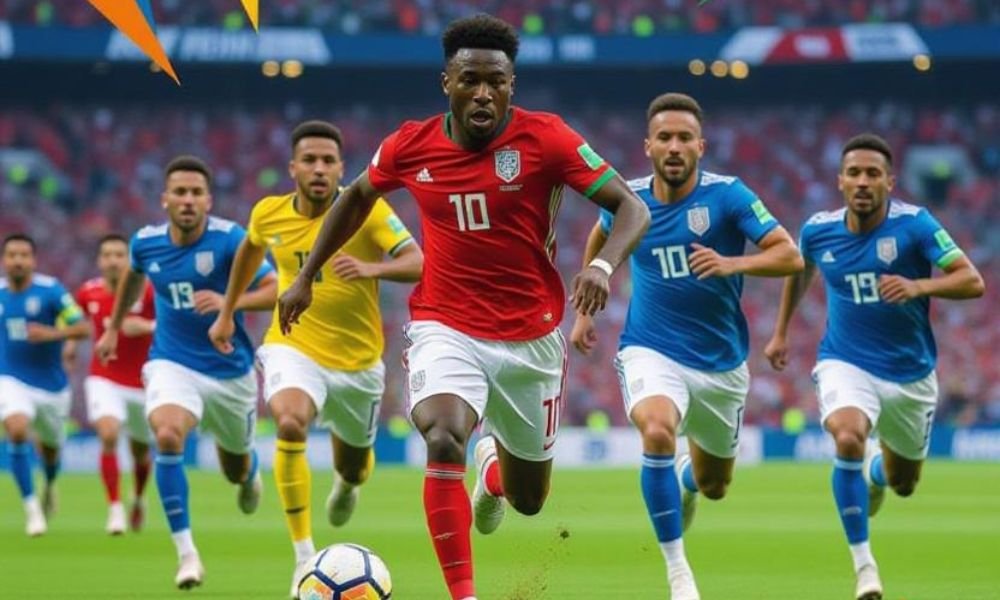
The 2026 World Cup will be the first to be hosted by three nations: Canada, the United States, and Mexico, and it will feature an expanded format including 48 teams. Following that, the 2030 tournament will be another joint-host affair across Spain, Portugal, Morocco, and South American nations Argentina, Paraguay, and Uruguay, commemorating the centenary of the World Cup. Saudi Arabia is slated to host in 2034.
Summary Table of World Cup Hosts
| Year | Host Country/Countries | Notable Facts |
| 1930 | Uruguay | First World Cup |
| 1934 | Italy | Italy’s first hosting |
| 1938 | France | Last pre-WWII tournament |
| 1950 | Brazil | First post-war World Cup, “Maracanazo” |
| 1954 | Switzerland | First with major TV coverage |
| 1958 | Sweden | Pelé’s World Cup debut |
| 1966 | England | England’s only World Cup win site |
| 1970 | Mexico | First Latin America country to host twice |
| 1982 | Spain | First 24 teams tournament |
| 1994 | United States | Largest stadiums and crowds |
| 2002 | Japan & South Korea | First dual hosting in Asia |
| 2010 | South Africa | First African World Cup |
| 2018 | Russia | Russia’s first World Cup |
| 2022 | Qatar | First Middle East host |
| 2026 | Canada, USA, Mexico | First tri-nation host, 48-team format |
| 2030 | Spain, Portugal, Morocco(+SAmerica) | Centenary tournament |
| 2034 | Saudi Arabia | First Middle East solo host |
Hosting Selection Process
Originally, FIFA awarded hosting rights in congress meetings without a formal process. This sometimes led to controversy, especially in early tournaments, due to travel difficulties and political tensions. In later years, FIFA adopted a structured bidding process and exhaustive voting by FIFA’s congress, typically deciding about seven years in advance.
Conclusion
The FIFA World Cup hosting history is a reflection of football’s rise as a truly global sport. From its South American origins to a worldwide spectacle involving multiple continents, co-hosting arrangements, and expanding teams, the tournament’s hosting journey embodies football’s unifying power and ever-growing appeal across the world.